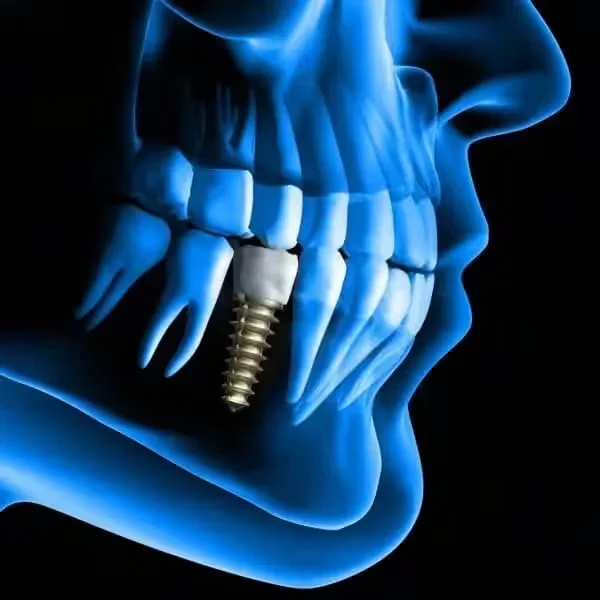
Are Dental Implants Painful? Myths vs. Facts
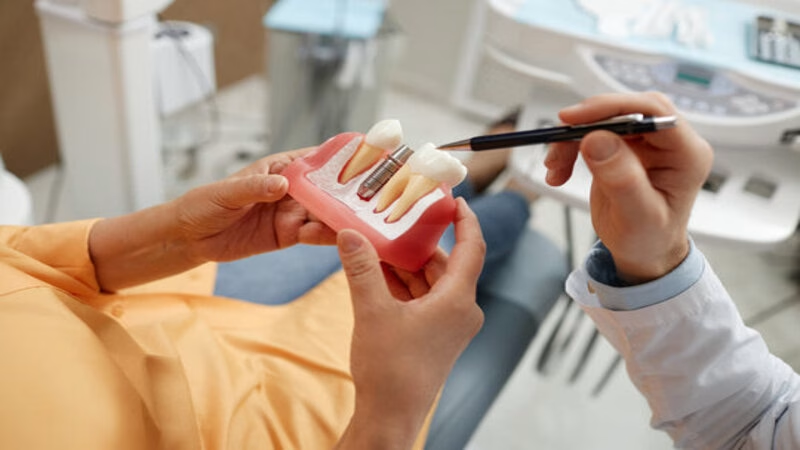
Are Dental Implants Painful? Myths vs. Facts
Dental implants have transformed modern dentistry by offering a permanent and reliable solution for missing teeth. Despite their success and predictability, many myths still create unnecessary fear and confusion among patients. Understanding the facts helps people make confident, informed decisions.
This guide clears common misconceptions about dental implants—covering pain, durability, cost, recovery, aesthetics, and daily life—so you can separate myths from reality.
Dental Implant Pain: Myths vs Facts
Myth: Dental implants are extremely painful
Many people assume implant surgery causes severe pain. In reality, modern techniques and anesthesia make the procedure highly manageable. Most patients compare implant discomfort to, or even less than, a routine tooth extraction.
Fact: Discomfort is minimal and manageable
Mild swelling or soreness may occur after surgery, but it is temporary and well controlled with prescribed medication and proper aftercare. Following clinical guidance ensures a smooth recovery.
Durability and Longevity of Dental Implants
Myth: Dental implants don’t last long
Some believe implants need frequent replacement. This misconception discourages many from choosing a long-term solution.
Fact: Implants are designed to last
With good oral hygiene and routine check-ups under
General Dentistry, dental implants can last decades. Titanium posts and high-quality crowns are highly durable and resistant to decay.
Cost and Long-Term Value
Myth: Dental implants are too expensive
Implants may seem costly initially compared to bridges or dentures, but this view ignores their long-term value.
Fact: Implants are cost-effective over time
Implants preserve jawbone health, maintain facial structure, and eliminate the recurring costs of replacements. Over time, they often prove more economical than temporary alternatives.
Who Is a Candidate for Dental Implants?
Myth: Not everyone can get dental implants
Age or general health is often wrongly assumed to be a limiting factor.
Fact: Most people are suitable candidates
With proper evaluation and planning, most patients qualify for implants. Advances in diagnostics, supported by
Digital Smile Design, help ensure implants align well with facial structure and bite dynamics.
Care and Maintenance of Dental Implants
Myth: Dental implants need complicated care
Some believe implants require special cleaning routines.
Fact: Implants are easy to maintain
Implants are cared for just like natural teeth—regular brushing, flossing, and professional cleanings are sufficient to maintain long-term health.
Aesthetic Results and Natural Appearance
Myth: Dental implants look artificial
Patients often worry implants will look fake or obvious.
Fact: Implants look and feel natural
Modern implant restorations are carefully matched to the size, color, and shape of natural teeth. When placed with precision and supported by healthy oral structures, implants blend seamlessly into your smile.
Risks, Success Rates, and Recovery
Myth: Dental implants frequently fail
Fear of complications is common but often exaggerated.
Fact: Dental implants have a high success rate
Success rates exceed 95% when treatment is planned correctly and patients follow post-operative instructions. Factors such as bone health, healing response, and overall care play key roles.
Recovery is usually straightforward. Most patients return to daily activities within a few days, experiencing steady improvement rather than prolonged discomfort.
Impact on Everyday Life and Wellbeing
Myth: Implants restrict daily activities
Some fear they won’t be able to eat, speak, or live normally.
Fact: Full function is restored
Implants restore chewing strength, speech clarity, and confidence. They function like natural teeth and enhance overall quality of life.
Role of Specialized Dental Care
Successful implant outcomes depend on proper diagnosis, planning, and long-term care. Conditions such as jaw alignment, muscle balance, and breathing patterns may influence results. In selected cases, evaluation related to
Sleep Apnea is considered when nighttime clenching or airway issues are suspected.
In growing patients or those with muscle imbalance, supportive therapies like
Myobrace Treatment may help stabilize oral function before or after restorative care.
Early Assessment and Long-Term Oral Health
Addressing dental concerns early supports better outcomes later in life.
Children Dentistry helps identify developmental issues that may otherwise lead to complex dental problems in adulthood.
In certain functional cases,
Tongue Tie Release may be advised to improve tongue movement, jaw balance, and overall oral stability.
Final Thoughts on Dental Implant Myths
Dental implants are a proven, long-term solution that improve oral health, comfort, and confidence. Understanding the facts allows patients to move past fear and make decisions based on evidence rather than misconception.